Crude Oil
CL$91.08
+1.38 (+1.54%)
Updated
Frequently Asked Questions4 questions
What affects Crude Oil price?
Jun 22, 2026Crude oil prices move because supply and demand change. That sounds simple, but dozens of forces pull those two levers every day. Some are predictable, like OPEC meetings. Some hit without warning, like a pipeline rupture or a sudden slowdown in China’s manufacturing. **Supply side — who controls the tap** The biggest single influence is OPEC+, the group of major oil producers led by Saudi Arabia and Russia. When they cut production, supply falls and prices tend to rise. When they raise output, prices drop. In 2023, OPEC+ cuts of roughly 2 million barrels per day helped push Brent crude above $90 a barrel for a stretch. Non-OPEC producers matter too. U.S. shale production hit a record 13.3 million barrels per day in late 2023, which capped price gains. A cold winter or hurricane season can disrupt production in the Gulf of Mexico. Geopolitical risk also plays a role — the Russia-Ukraine war added a war premium of roughly $10–15 per barrel in early 2022, traders told Reuters at the time. **Demand side — who uses the oil** Global economic growth drives oil demand. When factories run, trucks haul goods, and people fly, they burn crude. China is the world’s largest importer. A 1% drop in China’s GDP growth can cut oil demand by roughly 300,000 barrels per day, according to International Energy Agency estimates. Seasonal shifts also matter. Summer driving season in the U.S. raises gasoline demand. Winter heating demand pushes up prices for heating oil. Refinery maintenance in spring and fall reduces crude demand temporarily. **Inventories — the buffer that matters** Commercial crude inventories in the U.S. are reported weekly by the Energy Information Administration. A bigger-than-expected build in stocks signals oversupply and pushes prices lower. A bigger draw pushes prices higher. Traders watch the Cushing, Oklahoma hub specifically — it is the delivery point for WTI futures. Low Cushing stocks can amplify price spikes. **The dollar and financial flows** Crude is priced in U.S. dollars. When the dollar rises, oil becomes more expensive for buyers holding other currencies, which can reduce demand. A weaker dollar has the opposite effect. The correlation is not perfect, but a 10% move in the dollar index historically shifts oil prices roughly 5–8% in the opposite direction, analysts at Goldman Sachs have said. Speculative positioning also plays a role. Hedge funds and commodity trading advisors (CTAs) take long or short positions based on price momentum. When CTAs are heavily long, they amplify upward moves. When they flip short, they can accelerate a selloff. **Refining margins and crack spreads** The price of crude is tied to what refineries can sell. If gasoline margins are wide, refineries bid up for crude. If margins collapse, they reduce runs, and crude demand falls. The crack spread — the difference between crude input and refined product output — is a leading signal. A wide crack spread is bullish for crude; a narrow one is bearish. **Practical scenario for a beginner** Imagine a month where OPEC+ announces a 500,000 barrel per day cut, the U.S. dollar weakens 3%, and Chinese factory data comes in above expectations. That combination points to higher oil prices. Conversely, a Saudi output increase, a surging dollar, and a Chinese economic slowdown suggest lower prices. **Risk context** Trading crude oil futures or CFDs involves significant risk. Leverage can multiply gains but also losses. A $1 move in crude can translate into a $1,000 gain or loss on a standard 1,000-barrel futures contract. Small price moves against a position can trigger margin calls. Beginners should start with small position sizes and never risk capital they cannot afford to lose.
Is Crude Oil a good investment right now?
Jun 29, 2026Crude oil is a high-risk, cyclical commodity with no guaranteed direction. Whether it is a good investment right now depends on your timeframe, risk tolerance, and view on supply, demand, and macro forces. Prices are set by global production decisions, economic growth expectations, and a volatile geopolitical backdrop. As of mid-2025, crude oil trades in a range near $75 per barrel for Brent, with supply constraints from OPEC+ cuts balanced against weaker Chinese demand and a strong dollar. For most retail investors, the answer is not a blanket yes or no. It is a case of weighing specific risks and positioning for a defined scenario. **The Bull Case** The main argument for owning crude oil today centers on supply discipline. OPEC+ has maintained production cuts totaling roughly 5 million barrels per day through 2024, and members like Saudi Arabia and Russia show no intention of flooding the market. U.S. shale output is growing, but at a slower pace than prior cycles. If global economic activity picks up, especially in the second half of 2025, demand could outrun the available supply. The Energy Information Administration projects global oil demand to rise by about 1.5 million barrels per day this year. A demand surprise could push Brent back above $90. Some fund managers see that as a tailwind for energy stocks and crude futures. **The Bear Case** Demand concerns are real. China, the world's largest crude importer, is seeing slower industrial growth and a shift toward electric vehicles. GDP growth there has dropped below 5%. That directly lowers diesel and gasoline use. Meanwhile, the U.S. dollar has been strong, which makes dollar-priced oil more expensive for buyers in other currencies. A strong dollar tends to suppress crude prices. Global inventories have also started rising in recent weeks, a sign that supply is catching up. If OPEC+ begins unwinding cuts later this year, the market could flip to a surplus. The International Energy Agency projects a surplus of roughly 1 million barrels per day in 2025 if supply remains at current trajectory. That is a bearish outlook. **What Moves Oil Prices** Crude oil is not like a stock. Its price is driven by three big forces: supply, demand, and the dollar. Supply means OPEC+ quotas, U.S. shale output, sanctions on Iran or Russia, and geopolitical disruptions like wars or pipeline attacks. Demand is tied to global GDP, industrial activity, and transportation fuel use. The dollar matters because oil is priced in dollars; when the dollar rises, oil gets cheaper elsewhere, which can reduce real demand. Traders also watch weekly U.S. inventory reports from the EIA, especially for crude stocks at Cushing, Oklahoma, the delivery point for WTI. A bigger than expected draw supports prices. A build pushes them down. **Risks to Be Aware Of** Crude oil is volatile. A 5% move in a day is normal. During the 2020 pandemic, WTI futures briefly turned negative. Leveraged products like ETFs and CFDs magnify those moves. Holding a crude oil ETF long term can cause losses from contango, where rolling contracts forward costs money. Short selling crude is possible through futures or inverse ETFs, but a sudden price spike from a political event can cause large losses. Many beginners treat oil like a stock, buying and holding without understanding the contract roll. That is a mistake. If trading oil futures or CFDs, position size should be small. Never risk more than can be lost. **Worked Example** Suppose oil is at $75. You think OPEC+ will keep output low, and you expect a recovery in global travel this summer. You buy a January 2026 Brent futures contract at $75. You need about $5,000 in margin per contract for a $75,000 notional position. That is roughly 15x leverage. If oil rises to $85, you make $10 per barrel, or $10,000, a 200% return on margin. If oil falls to $65, you lose $10,000, wiping out your margin entirely. That is the risk of leverage. A more conservative approach is to use a smaller position, or buy shares of a diversified energy ETF instead of crude futures. **Practical Steps** Check the latest EIA weekly petroleum report. Look at the change in crude stocks and gasoline demand. Read OPEC+ statements after their next meeting. Watch the dollar index and Chinese PMI data. Those four inputs give a decent read on direction. For learning, paper trade crude futures on a simulator for three months before using real money. Understand contango and backwardation. A futures curve in contango means later contracts cost more than spot. That makes long positions expensive to hold. A backwardated curve is favorable for longs. **Tax and Regulation Context** In many jurisdictions, gains from oil futures or CFDs are taxed as short term capital gains at the ordinary income rate. Some countries treat commodity ETFs differently. Margin trading carries risk of loss beyond deposit, especially with CFDs. Check the rules for your broker and country. Do not assume tax treatment is simple. Consult a tax professional for large positions. Real traders do not buy oil because it feels cheap. They buy because they have a specific view on a specific catalyst. Maybe it is an expected summer demand spike. Maybe it is a planned OPEC+ meeting. Maybe it is a hurricane threat to Gulf of Mexico production. Without a catalyst, oil just sits in a range, grinding through inventory reports and macro headlines. The current range from $70 to $80 Brent has held for three months. A breakout needs a real shift. If the goal is long term portfolio diversification, crude oil does not provide that the same way bonds or gold do. It correlates with equities during booms and crashes. It can drop 50% in a recession. It can spike 50% in a supply crisis. That is not stable. A small allocation, say 2% to 5% of a portfolio through an oil futures ETF, can hedge against inflation, but it is not a core holding. One concrete scenario: if the U.S. economy lands softly with no
Crude Oil price forecast and outlook?
Jun 22, 2026Near-term crude oil prices hinge on OPEC+ supply decisions, Chinese demand data, and U.S. inventory levels. Most analysts see Brent crude trading between $70 and $85 a barrel through the next quarter, with a bearish bias if global growth slows further. **The big drivers right now** OPEC+ meets in early June to set production targets for the second half of the year. The group has been cutting output by roughly 2 million barrels per day since late 2023. If they extend those cuts, prices get a floor. If they start to unwind, expect pressure on the downside. China matters more than anything else on the demand side. The country buys about 11 million barrels a day, roughly 11% of global consumption. Industrial output and refinery runs have slowed there since March. Traders said a weaker Chinese recovery could push Brent below $75. U.S. crude stockpiles have been building for three straight weeks, according to EIA data. That's unusual for spring when refineries ramp up for summer driving season. Commercial inventories sit about 3% above the five-year average. That surplus caps any rally. **Supply side risks that could flip the setup** Geopolitical premiums have faded since April. The Israel-Iran tit-for-tat never disrupted actual oil flows. But the risk is not gone. Any escalation that threatens the Strait of Hormuz — where about 20% of global oil moves — could add $5 to $10 a barrel overnight. Russian exports have held steady despite sanctions. India buys about 1.5 million barrels a day of Russian crude, roughly double its 2022 volume. That keeps global supply higher than the headline numbers suggest. **What the forecast models say** The EIA's short-term outlook projects Brent averaging $84 in the third quarter. The IEA is more bearish at $78. The spread tells you the range of outcomes. A practical scenario: if OPEC+ holds cuts and China's stimulus delivers a demand lift, Brent could test $85. If OPEC+ starts adding barrels and China disappoints again, the move is toward $70. The middle is $77 to $80. **Key numbers to track** Weekly U.S. crude inventories. A draw of 3 million barrels or more is bullish. A build of 2 million or more is bearish. Chinese PMI data. The manufacturing PMI has been below 50 for two months. A move above 50 would signal stronger industrial demand. OPEC+ compliance. Iraq and Kazakhstan have overproduced their quotas by 200,000 barrels a day combined. If they cut deeper to compensate, the group's discipline improves. **Risk context for traders** Leveraged oil products like futures and CFDs carry margin risk. A 5% intraday move against a position can trigger a margin call. Spread bets on crude with 10x leverage mean a 10% price move wipes out the full position. Oil ETFs like USO track front-month futures, not spot prices. Contango and backwardation eat into returns over time. One trader said the USO lost about 4% to roll costs alone in early 2024 when the market was in contango. Short selling crude in a tight supply environment is risky. The oil market is prone to sudden short squeezes when geopolitical headlines hit. A trader who shorts at $78 with OPEC+ cutting risks a $5 gap up overnight. Forecasts are not guarantees. The oil market has a history of defying consensus. In early 2023, most analysts called for $90 oil. Demand from China underperformed, and Brent averaged $82. **What to watch next** The OPEC+ meeting will set the tone for July and August. If the group signals cuts will last through year-end, expect a bid under $75. If demand from China picks up in the same window, $85 becomes realistic. For now, the range is wide. The next batch of U.S. inventory data and Chinese industrial output numbers will narrow it.
How to trade Crude Oil?
Jun 22, 2026Trading crude oil means betting on the direction of oil prices. You can do this through futures, ETFs, CFDs, or stocks of oil companies. Each method has different risk and cost structures. Beginners often start with ETFs or CFDs because they don't require a futures account. Futures are more direct but need margin and understanding of expiry dates. Crude oil comes in two main grades. West Texas Intermediate (WTI) is the US benchmark. Brent is the global benchmark, priced in the North Sea. WTI tends to trade at a slight discount to Brent because of landlocked supply. Prices move on supply news (OPEC cuts, US shale output) and demand signals (economic data, refinery runs). ## Two main ways to trade **Futures contracts** give you direct exposure to the commodity. Each contract represents 1,000 barrels. You put up margin, typically 5-10% of the contract value. If oil moves $1, your account swings $1,000. That leverage cuts both ways. A 10% drop against you can wipe out your margin. Futures have monthly expiry dates. You must roll before expiry or take physical delivery. Most retail traders never deliver; they close or roll. **ETFs** let you trade oil without a futures account. The most popular is the United States Oil Fund (USO). It holds near-month WTI futures. ETFs have management fees and tracking error. When the futures market is in contango (later months more expensive), rolling contracts costs you. That's called contango decay. In backwardation (later months cheaper), rolling gives you a small boost. Over long holds, USO can drift away from spot oil because of these rolls. **CFDs** are contracts for difference offered by brokers. You pay a spread to enter and maybe overnight funding if you hold past close. CFDs mimic futures price moves but with smaller contract sizes. They are leveraged products. In many countries CFDs are banned for retail investors. Check your local rules. **Oil company stocks** like Exxon or Chevron correlate loosely with oil. They add company risk and dividend policy. Not a pure oil trade. ## Key terms to know **Contango** is when futures prices increase with delivery month. The market expects higher prices later. Long traders pay to roll. **Backwardation** is when nearer futures are more expensive. The market expects lower prices later. Long traders benefit from roll. **Speculative positioning** is reported weekly by the CFTC. It shows how many long and short contracts hedge funds hold. Extreme bullishness can signal a top. **OPEC+ decisions** happen roughly every two months. The group of oil producers can cut or boost supply. Meetings often move prices 3-5% in a day. **US crude inventories** are reported by the EIA every Wednesday at 10:30 a.m. ET. A build is bearish; a draw is bullish. ## A simple trading checklist 1. Check the trend. Is oil above its 50-day moving average? If yes, lean long. If no, lean short. 2. Look at the weekly EIA inventory report. A surprise draw of more than 2 million barrels often pushes prices up $1-2. 3. Check OPEC headlines. Any leak about production changes can swing prices 3% or more. 4. Set a stop loss. For a long trade, place it below the previous week's low. For a short, above the high. 5. Decide your position size. Never risk more than 1-2% of your account on one trade. 6. Take partial profits at a 1:1 risk-to-reward ratio. Let the rest run with a trailing stop. ## Worked example of a crude oil trade Suppose WTI is at $75 a barrel. The 50-day moving average is $73. The EIA report just showed a draw of 3 million barrels. You decide to go long with a CFD or futures mini contract. You buy one mini contract (500 barrels) at $75. Your broker requires margin of $3,000. You set a stop at $73.50, a loss of $1.50 per barrel. That is $750 risk ($1.50 x 500). If your account is $50,000, that's 1.5% risk, acceptable. Your target is $78, a $3 gain per barrel. That's a 2:1 risk-to-reward. Price reaches $78 a week later. You sell half the position (250 barrels) at $78, locking $750 profit ($3 x 250). Move your stop on the rest to breakeven at $75. The remaining half runs to $79 before reversing. You exit at $78.50, gaining another $1.50 per barrel on 250 barrels = $375. Total profit $1,125, minus commissions and funding. Not bad. ## Risk context Leverage amplifies losses. A 5% move against you can lose half your margin. Never trade oil with money you cannot lose. CFDs and futures carry the risk of losing more than your deposit if the market gaps. Use stops, but know gaps can blow through them. Oil is volatile. Daily moves of 2-3% are normal. On OPEC days, 5-8% can happen. Spread betting (UK) and CFDs have overnight funding charges. Holding for weeks can eat profits. Futures have no overnight charge but you must roll before expiry. The roll can cost or benefit depending on contango or backwardation. Tax treatment varies. In the US, futures get 60/40 tax treatment (60% long-term capital gains, 40% short-term). ETFs are taxed as collectibles, a higher rate. CFDs are usually treated as ordinary income. Check with a tax professional. ## Final practical advice Start small. Trade one mini contract or a small CFD size until you feel the rhythm. Paper trade first if your broker offers it. Oil is not like stocks. It has strong seasonality (driving season in summer, heating season in winter) and geopolitical spikes. Do not add to a losing trade. Cut losses quickly. Let winners run. The easiest method for a beginner is an oil ETF like USO with a small position, a stop loss, and a clear exit plan. Avoid trading around major data releases until you have experience. The EIA report often creates a chaotic minute right at 10:30. Wait 15 minutes for the noise to settle.
Latest Crude Oil Analysis

NYSE tests tokenized settlement; DTC pilot clears live trades
13d ago
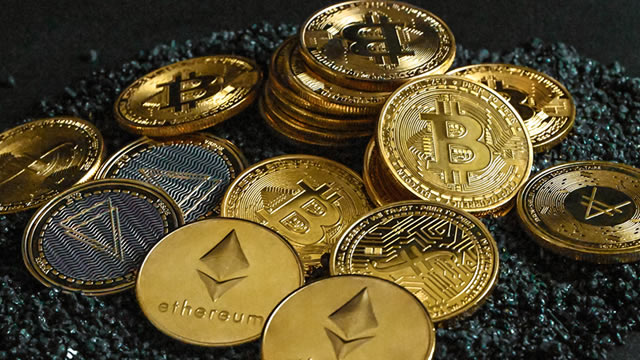
CLARITY Act odds sink to 27% after Senate delays crypto bill
25d ago

CLARITY Act delay risks US crypto lead, Haridopolos warns
25d ago

Goldman CEO backs CLARITY Act as banks fight stablecoin rewards
31d ago

Why ServiceNow's AI Product Cycle Matters After Q2 Beat
45d ago

Zoetis Falls 60%: Analyst Says Decline Justified, Now Buy
48d ago
This page is for educational purposes only and does not constitute financial advice. Past performance is not indicative of future results. Trading involves substantial risk of loss. Full disclaimer.
Key Data
Price$91.08
Change+1.38
% Change+1.54%
Asset ClassCommodities
Related Assets